
Licensed Adult Family Care in a Residential Setting
Baraka Houses Inc. operates licensed adult family homes in Wisconsin, serving the Madison area. Each home is licensed under Wisconsin Administrative Code chapter DHS 88 and accommodates a maximum of four adult residents, who receive care and services well beyond room and board within an ordinary residential setting rather than an institutional one.
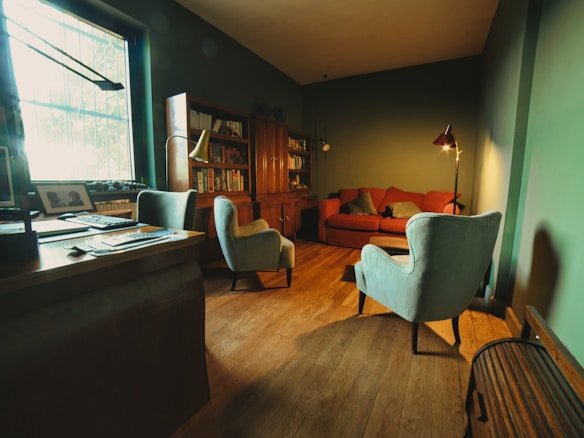
Baraka Houses Inc. provides licensed residential care that safeguards the health, safety and dignity of every resident, delivers individualized support calibrated to assessed need, and sustains the autonomy, privacy and community connection of the adults entrusted to our care.
Operating Standards
The following are the measurable standards to which the organisation operates. They are the basis on which families, guardians, case managers and referring providers may hold us accountable.
Individualized Service Planning
Each resident is admitted under a written individual service plan derived from a comprehensive pre-admission assessment. The plan specifies the assistance required for each activity of daily living, medication regimen, dietary and swallowing requirements, mobility and transfer status, cognitive and behavioural considerations, and personal preference. Plans are reviewed on a scheduled basis and revised on any change in condition.
Preservation of Function and Autonomy
Assistance is calibrated to retained ability rather than delivered uniformly. Residents perform the components of each task they remain capable of performing, on the clinical principle that assistance exceeding assessed need accelerates functional decline. Restrictive measures are applied only where clinically indicated and documented.
Medication Accuracy and Accountability
Every dose administered, refused or held is documented at the point of administration. Medication reconciliation is performed on admission and following every hospitalisation or prescriber change, and physician orders are implemented the same day they are received.
Early Identification of Change in Condition
A licensed capacity of four residents per home sustains a caregiver ratio that permits establishment of a reliable behavioural and functional baseline for each individual. Intake, sleep, continence, mood, weight and skin integrity are monitored so that deviation is identified and escalated at presentation rather than retrospectively.
Nutritional Adequacy and Dysphagia Safety
Meals are prepared in the home to each resident's prescribed diet and texture specification, including mechanically altered and pureed consistencies and thickened liquids. Oral intake and hydration are monitored, and modified-texture orders are followed as written.
Continuity of Caregiving Staff
Care is delivered by a dedicated, consistently assigned caregiving team who know each resident's history, routine and communication style. Continuity is treated as a clinical control rather than a scheduling convenience, because it is what makes subtle change in condition detectable.
Regulatory Compliance and Staff Competency
The organisation operates in accordance with Wisconsin Administrative Code ch. DHS 88 and maintains caregiver background checks under ch. DHS 12. Service providers complete the required initial training in resident health, safety, welfare, rights and treatment inclusive of fire safety, first aid and the required annual training thereafter.
Transparent Communication with Families and Care Teams
Families, guardians, case managers and treating providers receive updates at an agreed frequency and immediate notification of any significant change in condition. Every referral receives a response within 24 to 48 hours.
Our Clinical Model
Caregiver Ratio as a Clinical Control
Four residents is the licensed capacity for an adult family home in Wisconsin, and our care model is built to exploit it. At this ratio our caregivers establish a reliable functional and behavioural baseline for every resident, which is the precondition for identifying a urinary tract infection presenting as acute confusion, an adverse medication effect, an unwitnessed fall, or the onset of functional decline at presentation rather than in retrospect.
Preservation of Function
Assistance is calibrated to assessed need rather than delivered uniformly. Residents perform the components of each task they remain capable of performing, with supervision rather than substitution, on the established principle that assistance exceeding assessed need accelerates loss of function. Restrictive measures are applied only where clinically indicated and are documented.
Family as an Information Source
Families hold history that no assessment instrument captures: prior routine, what constitutes a difficult day for the individual, established preference, and the personal context that frequently explains behaviour the clinical record does not. That history is elicited at admission and treated as part of the service plan, and families receive updates proactively rather than on request.
Candour on Suitability
An adult family home is not an appropriate setting for every individual. Some prospective residents require skilled nursing, a locked memory care unit, or intervention beyond what a licensed adult family home may lawfully or safely provide. We determine this at assessment and direct families to a suitable alternative rather than accepting a placement likely to break down.
Who We Care For
Our residents are adults whose care needs exceed what can be safely met living independently: older adults, adults with physical disabilities, adults with intellectual or developmental disabilities, and individuals living with Alzheimer's disease or other dementias. Acuity ranges from residents requiring supervision and medication administration to residents requiring total assistance with every activity of daily living.
Commonly Appropriate Where an Individual
- Requires hands-on assistance with most activities of daily living
- Decompensates or becomes agitated in large congregate settings
- Requires texture-modified meals or dysphagia precautions
- Requires supervision for cognitive impairment or elopement risk
- Is discharging from hospital or rehabilitation and cannot safely return home
- Has a medication regimen requiring administration and documentation
Referral Sources
Hospital discharge planners, county and managed-care case managers, guardians and corporate guardians, and senior placement advisors.
Where We Operate
We operate multiple licensed residences in Wisconsin, across the Madison area, each maintained at the four-resident maximum. Availability varies by home and moves quickly, and is confirmed by phone.
- 3706 Spenser Ln, Madison, WI 53704
Business office - Licensed homes across the Madison area
Residence addresses are provided privately to families and case managers rather than published, in the interest of resident privacy. Please phone for locations and current availability.
Visiting
Visiting is not restricted to fixed hours. These are residents' homes, and families are welcome to visit, share a meal or take a resident out. We request advance notice only so that visits do not coincide with scheduled personal care or rest periods.
Resident Rights
Residents retain the right to privacy, dignity, self-determination, freedom from restraint and from abuse or neglect, participation in their own care planning, control of their personal funds where capacity permits, access to their own records, reasonable access to visitors, and to raise a grievance without reprisal. Rights are set out in the admission agreement and reviewed with the resident, family or guardian at admission.
Arrange a Tour
Tour the home, meet the caregiving team, and review the accommodation and service planning process in detail.